
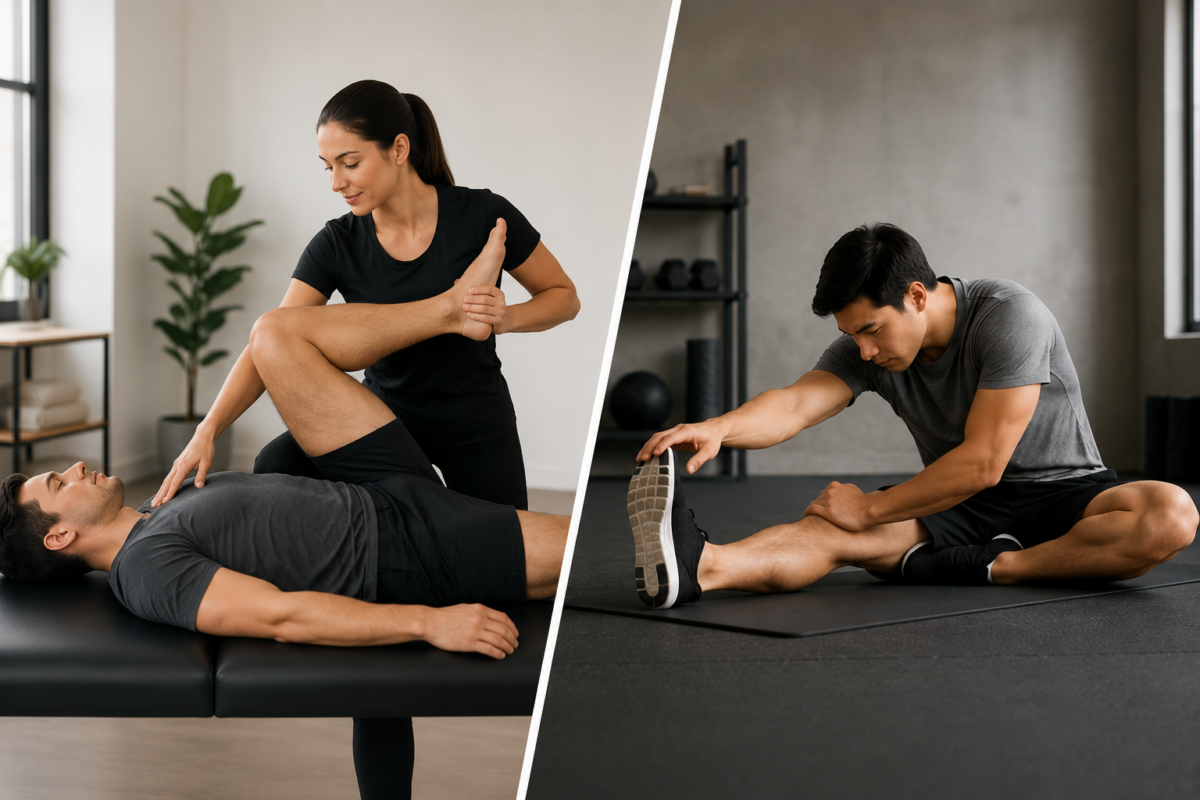
Assisted Stretching vs. Solo Stretching: Which One Is Right for You?
When it comes to improving flexibility, reducing pain, and boosting overall wellness, the debate between assisted stretching vs. solo stretching is one worth having. Both approaches offer real benefits — but understanding the difference can help you get the most out of your routine and reach your health goals faster. At Family Medicine Institute, we want to help you move better, feel better, and live better.
What’s the difference, exactly?
Solo stretching is exactly what it sounds like — you’re in charge. You stretch on your own, at your own pace, using techniques you’ve learned over the years (or maybe just Googled last Tuesday). It’s accessible, free, and easy to fit into any schedule.
Assisted stretching, on the other hand, involves a trained professional or therapist guiding your body through specific stretches. They apply controlled pressure, hold positions longer than you’d typically do yourself, and target muscles in ways that are tough to reach on your own.
Assisted stretching
- Deeper muscle release beyond what you can do alone
- Correct form and technique, reducing injury risk
- Targets hard-to-reach muscle groups effectively
- Faster flexibility gains over time
- Personalized to your specific needs and limitations
- Great for chronic pain and post-injury recovery
Solo stretching
- Free and accessible anytime, anywhere
- Builds body awareness and independence
- Great for daily maintenance and warm-ups
- Low barrier to entry — no appointments needed
- Helps maintain gains between sessions
- Reduces stress and promotes mindfulness
The big benefits of assisted stretching
Here’s the honest truth: most of us don’t stretch the right way when we’re on our own. We hold stretches for too short a time, avoid the muscles that are tightest (because, ouch), and rarely hit proper depth. That’s where assisted stretching really shines.
A trained professional can move your body into positions you simply can’t achieve on your own. Think of it like having a spotter at the gym — someone ensuring you’re safe, effective, and making real progress. Research shows that assisted techniques like PNF (proprioceptive neuromuscular facilitation) stretching can produce significantly greater flexibility gains compared to static stretching alone.
If you’re dealing with tight hips, lower back pain, stiff shoulders, or recovering from an injury, assisted stretching can be a total game-changer. It’s also a great fit if you sit at a desk all day and feel like a human pretzel by 3pm.
Solo stretching still deserves a spot in your routine
Don’t count solo stretching out, though! It’s an essential daily habit that keeps your body loose, reduces stress, and supports circulation. Morning stretches, post-workout cooldowns, and evening wind-down routines are all fantastic ways to keep your muscles healthy between any assisted sessions.
The key is consistency. A few minutes of intentional stretching each day — even if it’s just 10 minutes on your living room floor — adds up to major benefits over time. Think of solo stretching as the maintenance, and assisted stretching as the upgrade.
The bottom line
The best approach isn’t either/or — it’s both. Use solo stretching as your daily foundation, and consider adding assisted stretching sessions for deeper work, recovery support, or when you’ve got a specific area that just won’t loosen up no matter what you do. Together, they’re a powerful combo for long-term mobility, pain relief, and quality of life.
Who should consider assisted stretching?
Assisted stretching is a great option for pretty much anyone, but it’s especially helpful if you’re an athlete looking to improve performance and recovery, someone managing chronic pain or stiffness, a person returning from injury or surgery, an office worker dealing with postural issues, or an older adult wanting to maintain or improve range of motion. When you work with a healthcare-guided provider, you know the stretching plan is tailored to your body — not a generic routine you found online.
Tips to get the most out of either approach
Whether you’re going solo or working with a professional, a few principles hold true. Always warm up your muscles first — cold muscles don’t stretch well and are more prone to strain. Never push into sharp pain; mild discomfort is normal, but pain is a signal to stop. Stay consistent — flexibility is built over weeks and months, not overnight. And breathe! Slow, deep breaths help your muscles relax and allow for a deeper stretch.
Ready to move and feel better?
The team at Family Medicine Institute is here to help you find the right approach for your body and your goals. Give us a call at 321-221-0801 to schedule an appointment and let’s build a plan that works for you.